
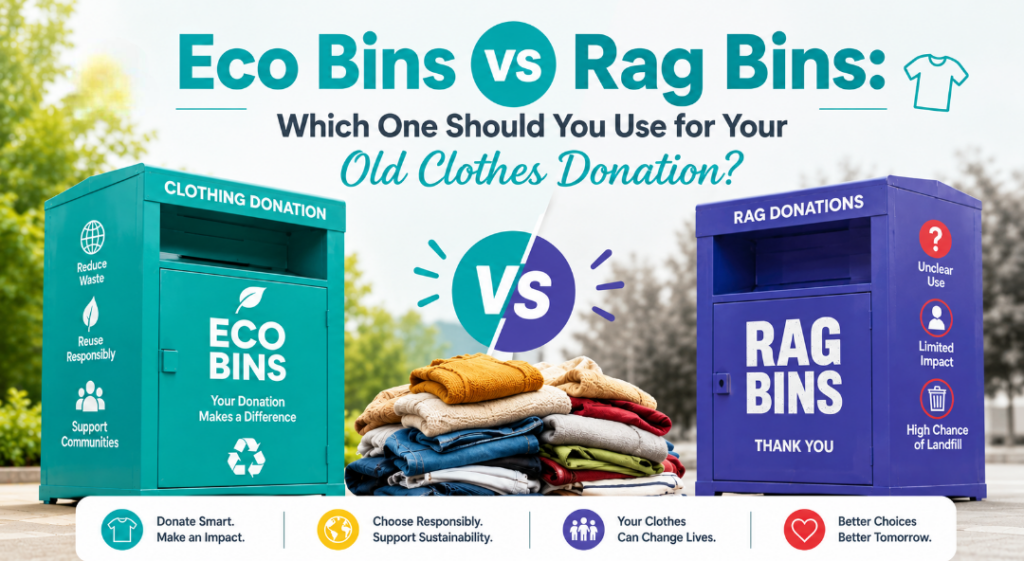
You’ve finally sorted through that overstuffed wardrobe. Some barely-worn jackets, a few stained tees, and a pile of odd socks you’ve been ignoring for months. You load it all into a bag, drive to the local drop-off, and then it hits you. Two bins. One says Eco Bin. The other says Rag Bin. Which one do you use?
It’s a common question and one that many Perth residents ask.
Eco bins and rag bins both help recycle unwanted clothing. But they serve slightly different purposes. Eco bins are designed to collect all clothing and household textiles for reuse or recycling. Rag bins primarily focus on worn, torn, or damaged textiles that can be transformed into new products.
At Clothing Please, both accept textiles in any condition, ensuring nothing goes to landfill, so you’re always making the right choice. However, understanding the difference between an eco bin and rag bin helps you donate smarter, support the right outcome for your clothes, and feel confident every time you use a bin.
Let’s learn exactly what each bin is, how they compare side by side, what goes in each one, and which to choose for your situation.
What Is an Eco Bin?
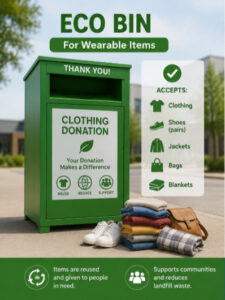
An eco bin, also called a clothing drop box or clothes recycling bin, is a dedicated drop-off container for all types of clothing and textiles, regardless of condition. The goal is to keep every item in the textile circular economy rather than sending it to landfill. This ensures clothing and household textiles are reused or responsibly recycled instead of sent to landfill.
At Clothing Please, eco-bins accept:
- All clothing for men, women, and children
- Shoes (paired), bags, scarves, and hats
- Bedding and towels
- Small-to-medium soft toys
- Damaged or worn textiles – no minimum condition required
You’ll find Clothing Please eco bins placed across Perth, in shopping centre car parks, petrol stations, and community hubs, making it easy to donate whenever you’re doing your regular rounds.
To learn more about the environmental impact of eco bins in Perth, read our detailed guide: How Clothing Eco Bins Perth Contributes to a Greener Planet.
Now let’s look at what makes a rag bin different and why it exists.
What Is a Rag Bin?
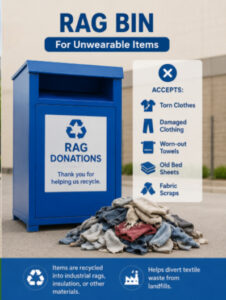
A rag bin, also known as a textile drop box, clothing recycling bin, or clothing deposit bin, is a specialist container designed specifically for worn-out, torn, stained, or otherwise unwearable textiles.
Where a standard charity bin might reject a ripped t-shirt or a stained towel, a rag bin is built for exactly those items. Everything dropped in goes towards industrial recycling; nothing to landfill.
Here’s what happens to items in a rag bin:
- Unwearable cotton and natural fibres are cut into ECOWIPES – industrial wiping cloths used in mining, oil, gas, and manufacturing
- Remaining materials are processed into fibre insulation or raw material for new textile products
- The last 1–5% of unusable scraps are converted into feedstock for other eco-friendly industrial processes, not landfill
Thus, rag bins keep worn or damaged textiles out of landfill by giving them a second life through recycling.
For a full guide to rag bins and where to find them across Perth, visit: Guide to Rag Bins Near Me in Perth.
So how do the two bins actually compare? Here’s the full breakdown.
What’s the Difference Between Eco Bins and Rag Bins in Australia?
The key difference between an eco bin and a rag bin is purpose and primary use case. Eco bins are designed for all textiles, including good-condition clothing for reuse, while rag bins specifically target worn, damaged, or unwearable items for recycling into industrial products.
At Clothing Please, both types operate with a zero-landfill guarantee.
The table below summarises the core distinctions at a glance:
| Feature | Eco Bin | Rag Bin |
| Purpose | Reuse + recycle all textiles | Recycle worn/unwearable textiles |
| Items Accepted | All clothing, shoes, bags, bedding, manchester | Torn, stained, unwearable clothing and textiles |
| Condition Required | Any (must be dry) | Any (no condition threshold) |
| Wearable Items | Sorted for community reuse via E’Co Pay It Forward | Mainly directed to recycling |
| Damaged Items | Recycled into ECOWIPES or exported responsibly | Industrial rags, fibre, ECOWIPES |
| End Destination | People in need (WA), Africa, ECOWIPES, recycling | ECOWIPES, fibre insulation, new textile material |
| Environmental Benefit | Keeps ALL textiles out of landfill | Keeps unwearable items out of landfill |
| Best Use Case | Full wardrobe cleanouts, mixed-condition clothing | Heavily worn, stained, or ripped items only |
Knowing the distinction simply helps you direct your clothes to the most impactful outcome.
In short, use an Eco Bin for wearable clothing and mixed-textile donations and a Rag Bin for worn or damaged textiles. With Clothing Please, however, every dry textile is accepted regardless of condition.
Curious about what other types of donation bins are available in Perth? See our guide on clothes donation bins for a full overview.
Now that you know the difference, let’s look at exactly what you can put in each bin.
What Can You Put in an Eco Bin?
Eco bins accept most clothing and household textiles. If it’s a dry textile, it’s welcome.
Clothing Suitable for Eco Bin Donation
- Wearable clothing: shirts, pants, dresses, jackets, coats, and suits for all ages
- Shoes: paired footwear
- Bags and accessories: handbags, backpacks, scarves, hats, and belts
- Bedding: sheets, pillowcases, towels, blankets, and quilts
- Small soft toys: plush or stuffed toys
- Damaged clothing: torn, stained, faded, or stretched items for textile recycling
Items You Should Not Place in an Eco Bin
- Wet or mouldy textiles (items must be dry)
- Non-textile items: furniture, electronics, hard plastics, or glass
- Food waste or household rubbish
- Doonas, pillows, or large mattress toppers (contact Clothing Please for bulk collection options)
What Can You Put in a Rag Bin?
Rag bins are designed for worn or unwearable textiles that can still be recycled. If it’s too worn to wear, it belongs here.
Clothing That Can Be Recycled via Rag Bins
- Torn or ripped clothing: shirts, jeans, knitwear, and sportswear
- Stained items: grease, paint, and persistent marks
- Worn-out underwear and socks
- Heavily faded or pilled garments beyond wearable condition
Common Household Textiles Accepted in Rag Bins
- Old towels and washcloths
- Ripped or worn bed sheets and pillowcases
- Worn-out tea towels and cleaning cloths
- Greasy rags (once fully dried)
- Stretched or frayed curtain fabric and other soft furnishings
One simple rule: If it’s a dry textile, Clothing Please accept it, regardless of condition. Contact our team if you need help finding your nearest Eco Bin, arranging a collection, or ordering a parcel post bag.
Eco Bin or Rag Bin – Which One Should You Use?
The easiest way to choose is to match the condition of your clothing with the right bin. Use this quick guide.
- If your clothes are still wearable → Use an Eco Bin.
Good-condition items are sorted for reuse and distributed to Perth families in need through Clothing Please’s E-Co Pay It Forward programme. - If your clothes are torn, stained, or unwearable → Use a rag bin.
These items are processed into ECOWIPES or recycled into fibre, ensuring nothing goes to landfill. - If you’re unsure → Use any Clothing Please drop it in the box.
Both streams are managed under one roof with a zero-landfill guarantee, so you can’t go wrong. - If you have a bulk load → Book a free Click & Collect service (Perth metro) or order a parcel post bag to send your textiles from anywhere in Australia.
Want to know what really happens to your clothes after donation? Read: What Happens to Donated Clothes in Charity.
Choose Clothing Please for Both – Eco Bins & Rag Bins Perth
Here’s why Perth residents trust Clothing Please with their old clothing:
- Accepts All Textiles: Wearable or damaged clothing, shoes, bags, bedding and more
- 9% Zero-Landfill Commitment: Keeping textiles in the circular economy
- Australia’s ISO-Certified ECOWIPES Program: ISO 9001 & 14001 accredited quality
- Supporting WA Communities: Free clothing for people doing it tough through E’Co Pay It Forward
- Trade, Not Aid: Creating jobs in Africa through ethical textile recycling
- Convenient Collection Options: Drop boxes, Click & Collect, Parcel Post and bulk collections
- Transparent End-to-End Tracking: Know your clothing is responsibly processed
Ready to clear the wardrobe the right way?
Drop Off. Donate. Make a Difference.
Find your nearest drop box, book a free Click & Collect, or order a parcel post bag; it takes minutes and makes a lasting impact.
FAQ – Eco Bins vs Rag Bins Perth
Are eco bins and rag bins the same thing?
Not exactly. Eco bins accept all clothing and household textiles for reuse or recycling, while rag bins mainly collect worn or unwearable textiles for recycling.
Can I put damaged clothes in an eco bin?
Yes. Clothing Please eco bins accept clothing in any condition; torn, stained, stretched, or heavily worn items are all welcome. Nothing dry is turned away, and nothing goes to landfill.
What happens to clothes in a rag bin?
Unwearable textiles placed in rag bins are sorted and processed into industrial wiping cloths (ECOWIPES), fibre insulation, or raw material for new textile products.
Can I use eco bins for shoes and bags?
Yes. Clothing Please eco bins accept shoes (paired), handbags, backpacks, bedding, Manchester, scarves, hats, and small soft toys – in addition to all types of clothing.
Do rag bins only accept rags, or can I donate good clothing too?
At Clothing Please, all textile items are accepted regardless of the bin label. Good-condition clothing placed in a rag bin will still be sorted for potential reuse rather than going straight to recycling. Nothing goes to landfill.