
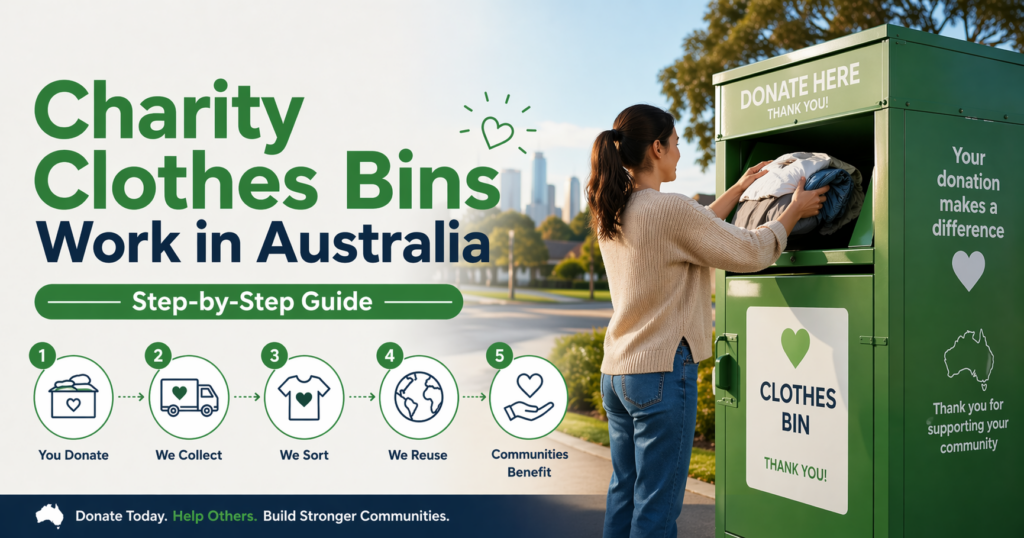
Those clothing donation bins you see everywhere? They’re actually pretty brilliant. You know the ones sitting in car parks and shopping centres, ready to give your old clothes a second chance at life. Instead of tossing that shirt you never wear into the rubbish, you can drop it in a charity bin for clothes and feel good about helping someone out.
We love these bins in Australia because, let’s face it, they’re super convenient. They’re everywhere; you can use them whenever you want, and they make clearing out your wardrobe so much easier. If you search for lifeline bins near me, you’ll often find multiple options within a few kilometres. Whether you’re doing a massive spring clean or just making space for that online shopping haul, these bins are there for you.
But here’s the thing: most of us drop our clothes in and never think about what happens next. Turns out, there’s a whole fascinating process that kicks in once your donation disappears into that bin. Your old clothes go on quite a journey to help both people and the planet.
From Donation to Distribution: The Journey of Your Clothes
So, what really happens after you’ve dropped off your clothes? Well, they don’t just sit there waiting for magic to happen.
Your donation actually goes through several important steps: collection, sorting, getting ready for its new life, and finally reaching someone who needs it. When you donate clothing bins responsibly, you’re starting a chain reaction that benefits many people. This isn’t random at all. There’s a whole system making sure wearable clothes get to people who’ll love them, while worn-out stuff gets recycled properly.
Pretty amazing how your old jumper can make such a difference, right?
Step 1 – Collection from Donation Bins
First things first, those bins aren’t just plonked down anywhere. They’re carefully placed where you’ll actually find them useful, such as shopping centres, busy car parks, and near community centres.
Collection crews keep a close eye on these bins, emptying them regularly so they don’t overflow and stay clean. And here’s why using proper donation clothing bins matters: clothes left outside get rained on, dirty, or damaged, and then nobody can use them. You and your family can trust that every item is handled properly.
The collection teams work hard to get your donations moving quickly to where they need to go.
Step 2 – Sorting and Quality Assessment
Next stop? A sorting facility where the real work begins.
Trained workers go through every single donation, checking what shape it’s in. They sort everything into groups:
- Really good stuff that can be sold
- Clothes perfect for giving directly to people
- Materials that need recycling
This bit’s crucial; it makes sure every item ends up exactly where it’ll do the best. Many people search for charity drop-off bins near me to start this process, and the quality of what you drop off makes their job much easier.
Step 3 – Cleaning and Preparation
The clothes that make the cut for reuse? They get a bit of TLC first.
Depending on what they need, items might be:
- Given a good clean
- Steamed to look fresh
- Folded nicely and packed up
Nobody wants to receive grubby donations, so this step makes sure everything’s in tip-top shape for its next owner. Using proper recycled clothes bins means your items stay clean and dry until they reach this stage.
Step 4 – Distribution and Reuse
Now for the exciting part, getting these clothes to people who’ll use them!
Some head to op-shops where they’re sold at bargain prices. Others go straight to community programmes helping families who really need them.
Got too much of something? No worries, excess stock gets shared around to make sure nothing goes to waste. Every piece finds its purpose.
Step 5 – Recycling and Repurposing
What about the clothes that are too worn out to wear? They’re not rubbish!
These textiles get a new life as:
- Industrial cleaning rags
- Insulation for buildings
- Stuffing for various products
- Brand new textile fibres
Way better than ending up in a landfill, don’t you think?
Step 6 – How Donations Generate Support
Here’s something cool: your donations do double duty.
When items get sold, that money goes towards:
- Helping people in your community
- Emergency relief when disasters strike
- Keeping the whole operation running
So, your old clothes aren’t just helping one person; they’re supporting entire programmes that make a real difference through a profit‑for‑a‑purpose business model.
Quick Reference – What to Donate and What to Avoid
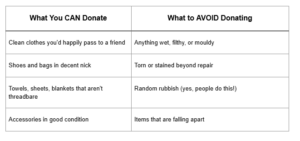
Pro tip: If you wouldn’t give it to someone you know, it’s probably not donation-worthy. Find real solutions for every type of textile.
How to Use Donation Bins the Right Way
What You Can Donate
Want to make sure your donations actually help? Stick to stuff that’s still got life in it:
- Clean clothes you’d happily pass to a friend
- Shoes and bags in decent nick
- Towels, sheets, and blankets that aren’t threadbare
If you wouldn’t give it to someone you know, it’s probably not donation-worthy.
What You Should Avoid Donating
Some things just create headaches when donated:
- Anything wet, filthy, or falling apart
- Random rubbish (yes, people do this!)
- Stuff that’s beyond saving
Being picky about what you donate helps everyone out.
Where to Find Donation Bins
Need to find a bin? They’re all over the place!
Lots of people search for charity drop-off bins near me to find their closest option – we’ve already highlighted that above. Check out:
- Your local shopping centre car park
- Community centres
- Near charity shops
Just make sure you get everything inside the bin; stuff left outside gets ruined.
Decluttering Tips Before Donating
Making donation easier starts with smart decluttering:
- Pull out clothes you haven’t worn in ages
- Actually, try things on if you’re not sure
- Be honest about what fits your life now
- Wash everything before donating
And please don’t stuff bins to bursting; smaller, regular donations work much better.
Bulk Donations from Businesses
Businesses sitting on excess stock? You can help too!
Donating bulk items:
- Clears your warehouse
- Ticks those sustainability boxes
- Supports great causes
There are systems set up specifically for handling larger donations efficiently.
Where the Proceeds Go
Money from sold donations goes to brilliant causes:
- Programs helping struggling families
- Support for people doing it tough
- Keeping donation services running smoothly
Every dollar stretches further than you’d think – and many funds go towards creating jobs through microbusinesses.
Environmental Benefits of Clothing Bins
These bins aren’t just helping people; they’re helping our planet too.
Did you know? Australians send over 800,000 tonnes of textiles to landfill every year. Only about 15% of donated clothes are worn again, but recycling even one kilogram of textiles saves roughly 25kg of CO₂ emissions.
By keeping clothes in use longer, we’re:
- Stopping tonnes of textile waste from hitting landfill
- Reducing demand for new clothes (and all that production impact)
- Saving water and resources
- Building a more circular economy
Strong environmental, social, and governance (ESG) commitments and a path to carbon neutrality make this possible.
Your small donation? It’s part of something much bigger.
Final Thoughts on Charity Clothing Bins in Australia & Sustainable Donation
Those charity clothing bins you pass every day are doing incredible work behind the scenes. They’re not just convenient drop-off points; they’re the start of a journey that helps people, supports communities, and protects our environment.
Next time you’re clearing out your wardrobe, remember that dropping clothes in a bin responsibly means they’ll be reused, recycled, or repurposed in the best possible way. It’s such a simple action, but it creates real, lasting change. Pretty good for a bag of old clothes.
Unlike standard bins, Clothing Please takes every single item, good, bad, or worn-out, and guarantees 100% recycling or repurposing. No dumping, no overseas pollution, just real sustainability with respect for both people and the planet.
They also support education and awareness initiatives that help people understand the real consequences of clothing in landfills and encourage more responsible donation habits.
Every bag makes a difference. Donate responsibly and be part of the change.
FAQs
Are clothing donation bins tax-deductible in Australia?
Yes, if you donate to a registered charity (like Vinnies, Salvos, or Lifeline) and get a receipt. For bins, keep a record of your donation value.
How often are donation bins emptied?
Most high-traffic bins are emptied 2–3 times per week. Collection crews monitor fill levels remotely or through regular routes.
Can I donate damaged clothes?
Yes, as long as they’re clean and dry. Severely torn or mouldy items should go to textile recycling (not clothing bins).
What happens to clothes that don’t sell in op shops?
They’re baled and sold to textile recyclers, turned into rags or insulation, or exported for reuse in other countries.
How do I find lifeline bins near me?
Use the Lifeline Australia website store locator or search “Lifeline donation bin” on Google Maps. Or contact Clothing Please directly for bin locations.