
Eco Bins for Clothing Donations: A Simple Way to Support Your Community
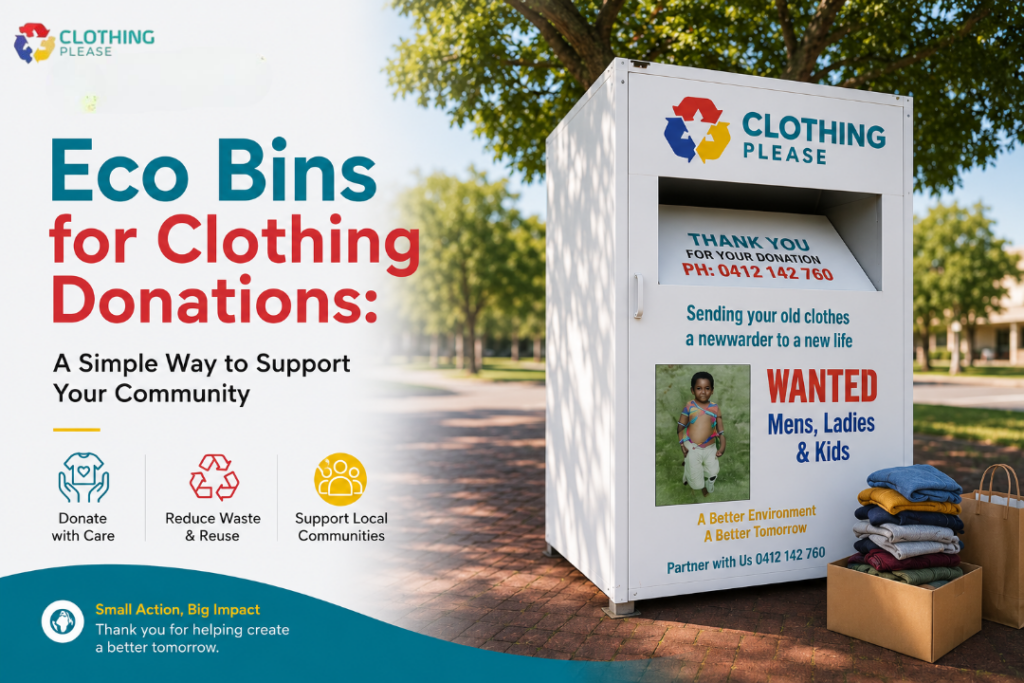
Eco bins for clothing donations are dedicated drop-off points where you can leave unwanted clothes, shoes, bags, and Manchester so they get recycled or reused instead of going to landfill.
In Perth, Clothing Please places these bins around the community and accepts items in any condition, good, worn, or damaged, because every piece still has value. Unlike a standard charity bin that only wants your best clothes for resale, an eco bin exists to solve the bigger problem.
This guide breaks down how eco bins work, what you can put in them, and how to choose one you can actually trust.
What Is an Eco Bin for Clothing Donations?
An eco bin is a textile recycling and donation point designed to keep clothing out of landfill. Unlike traditional donation bins that may only accept wearable clothing, eco bins also collect damaged textiles so they can be reused, recycled, or repurposed.
Clothing Please has operated this model for more than 45 years. As part of the Environmentally Concerned Organisation (E’Co), every donation is tracked from collection through to its final destination, helping ensure textiles are reused or recycled rather than sent to landfill.
Eco Bins vs. Traditional Charity Bins
People often use “charity clothing bins” and “eco bins” interchangeably, but there are real differences worth knowing before you donate.
| Feature | Traditional Charity Bin | Eco Bin (Clothing Please) |
| Condition accepted | Good, resalable items only | Any condition, good or damaged |
| Torn/stained items | Usually rejected | Accepted and recycled |
| Business model | May focus primarily on resale | Openly for-profit, profits reinvested into people and environment |
| Traceability | Handling of unsold textiles varies between organisations | Full tracking from collection to processing |
| Local impact | Varies | Free clothing given to WA people in need via Eco Pay It Forward |
| Landfill outcome | Disposal and recycling practices vary by operator | Zero-landfill guarantee, 99.9% reused or recycled |
This distinction matters because donation programs don’t all operate the same way.
Some organisations focus mainly on reselling wearable clothing, while others also recycle damaged textiles. Clothing Please manage every item it collects, including clothing that can’t be resold.
How the Eco Bin Journey Works
Every bag dropped into an eco bin goes through a clear process rather than disappearing into a black box:
- Collection: Items are gathered from drop boxes, home pickups, or mobile bins across Perth and regional WA.
- Sorting: At the Wangara warehouse, clothing, shoes, bags, and Manchester are graded by condition and type.
- Local redistribution: Wearable items are set aside for the Eco Pay It Forward program, giving free clothing to Western Australians facing hardship, including domestic violence survivors and families supported by child protection services.
- Recycling and export: Surplus stock is baled and sent to processing partners, where roughly 20–25% becomes cotton rag (returned to Australia as ECOWIPES), a small percentage is remanufactured into new textiles, and the rest is recovered as feedstock rather than sent to landfill.
Why Clothing Please Built This System
In March 2023, reporting emerged that discarded Australian clothing, labelled “Dead White Man’s Clothing”, was polluting beaches and landfills overseas. In response, Clothing Please set up a locally run operation specifically to collect and properly recycle dumped clothing rather than leaving it to accumulate.
This is also why traceability matters so much to the process described above. You can read the full breakdown, including how this response created local jobs, on the About Us page.
What You Can and Can’t Put in an Eco Bin
Eco bins are for textiles, not general waste. Being specific here keeps bins usable for everyone and prevents illegal dumping.
What Belongs in an Eco Bin?
- Clothing (any condition, all sizes)
- Shoes and boots
- Handbags and small accessories
- Manchester (sheets, towels, blankets, and doonas)
- Small to medium soft toys
What Should Stay Out?
- Furniture
- Mattresses
- Prams and bikes
- Books
- Large or hard plastic toys
- TVs
- Picture frames
Leaving furniture or electronics beside donation bins creates illegal dumping, which many councils across WA are working to reduce, especially since some verge-side collections have been scaled back.
If you need to dispose of non-textile items, Clothing Please can point you towards other E’Co initiatives, including E’Co Recycle It. You can also check The Solutions page for more on how these items are handled responsibly.
Ways to Donate: More Than Just a Bin Clothes Donation
A clothes donation bin is only one option. Depending on how much you have and your schedule, there are several ways to get items to Clothing Please:
| Method | Best For | How It Works |
| Drop Boxes | Everyday donations | Use the online locator to find your nearest bin |
| Click-Collect | Larger loads, no car | Free door-to-door pickup across Perth metro (T&Cs apply) |
| Parcel Post | Regional WA or interstate | A “Recycle – My Clothes” bag is mailed to you; drop the sealed bag at any post office |
| Mobile Drop Boxes | Community events, schools, workplaces | A truck or trailer is left on-site over a weekend |
| Bulk Collections | Businesses, retailers, large clear-outs | In-house shipping handles anything from one pallet to full sea containers |
If you’re wondering where the nearest bin clothes donation point is, the Contact Us page has the current locator and direct contact details for arranging a pickup.
Why This Matters for Perth Right Now
Western Australia’s donation habits directly affect how much textile waste ends up in landfill. Every kilogram diverted through a responsible eco bin is a kilogram that doesn’t add to that total.
The issue extends beyond local landfills too; Australian clothing has previously been found dumped on beaches and in landfills overseas, which made headlines and raised serious questions about where donations really end up.
Clothing Please has since set up local, staffed operations specifically to recover and properly process dumped clothing, rather than leaving it unaccounted for.
For context on how donations are typically handled across the city more broadly, our guide on donating clothes in Perth covers pickup options and preparation tips, while our rag bins guide is useful if most of what you have is too worn out to be resold.
Who Actually Benefits
Eco bins aren’t just an environmental tool; they support real people. Clothing Please works with:
- Domestic violence survivors and child protection services
- The homeless and unemployed
- House fire victims and people facing financial hardship
- Schools, charities, and NGOs restricted by their own donation policies
- Businesses and corporates building out ESG programs
You can learn more about the organisations and people we support on the Meet Our Community page.
These initiatives also feed into Clothing Please’s wider goals around zero landfill and carbon neutrality, outlined on the Our Priorities section.
How to Choose a Trustworthy Eco Bin Provider
Not every bin labelled “charity” or “recycling” operates the same way. Before you donate, it’s worth checking a few things:
- Is ownership disclosed? A legitimate operator will tell you clearly whether it’s a charity or a for-profit business and where profits go.
- Do they accept damaged items? If a bin only wants “good condition” clothing, ask what happens to the rest of your bag.
- Is there traceability? Ask whether the operator can show where collected items actually end up.
- Is there a local benefit? Programs that give clothing directly to people in your state, like Eco Pay It Forward, show a genuine community focus rather than resale-only motives.
- Are they upfront about landfill outcomes? A zero-landfill or 99%+ diversion claim should be backed by an actual process, not just a slogan.
Your Clothes Can Help More Than You Think
Choosing an eco bin instead of throwing textiles into landfill is one of the simplest ways to reduce waste and support your local community, and it costs nothing but a bit of sorting time.
Whether you use a local clothes donation bin, arrange a Click-Collect pickup, or post a parcel, every bag helps reduce landfill, supports Western Australians in need, and keeps the textile fashion circular economy moving.
Ready to donate? Get in touch with Clothing Please to find your nearest bin or book a collection.
FAQs
What’s the difference between an eco bin and a rag bin?
An eco bin accepts wearable and damaged clothing together for sorting, while a rag bin is specifically for unwearable textiles like torn sheets or stained towels destined for recycling into rags.
Do I need to wash clothes before donating them to a bin?
Yes, items should be dry and reasonably clean before donation, mainly to prevent mould and pest issues while items are stored and sorted.
Is there a cost to use charity clothing bins in Perth?
No. Drop-off bins, Click-and-collect pickups and parcel post donations through Clothing Please, all are free for the public.
Can businesses use eco bins for surplus stock?
Yes, bulk collections are available for businesses, retailers, and corporates clearing surplus inventory, from single pallets to full containers.
What happens if a bin near me is full or damaged?
Report it directly through the Contact Us page so the location can be serviced quickly and to discourage illegal dumping beside the bin.